Introduction to DAPS Handover
In this article, we will discuss the basics of DAPS (Dual Active Protocol Stack) Handover in 5G networks.
What is DAPS Handover?
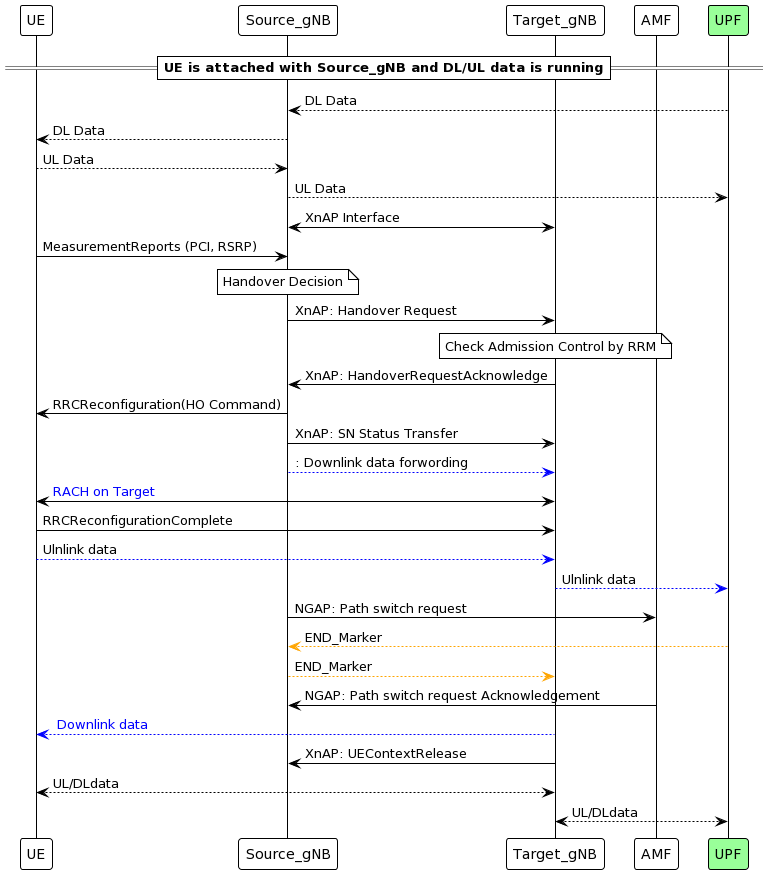
DAPS (Dual Active Protocol Stack) handover is a handover procedure designed to minimize interruption during the transition between cells. In this mechanism, the User Equipment (UE) maintains the source gNB configuration even after receiving the Handover Command and continues using it until the Random Access (RACH) procedure at the target gNB is successfully completed.
Key Characteristics of DAPS Handover:
• UE continues transmission (TX) and reception (RX) on the source cell after receiving the handover request.
• UE performs simultaneous reception of user data from both source and target cells.
• UE switches uplink (UL) transmission to the target cell after completing the RACH procedure.
• DAPS reduces handover interruption time to almost 0 ms by maintaining the source radio link while establishing the target radio link.
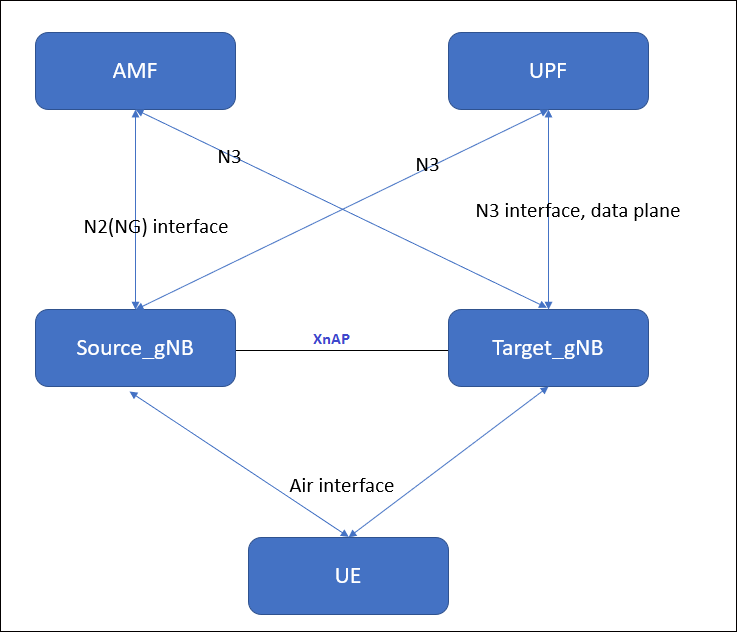
• DAPS handover is supported over both Xn and NG interfaces.
• It can be used for RLC AM (Acknowledged Mode) or RLC UM (Unacknowledged Mode) bearers.
• Downlink Data Forwarding is mandatory during a DAPS Handover
NG-Based DAPS Handover Call Flow:
Step 1: UE sends a Measurement Report to the Source CU, which decides whether to perform a Normal or DAPS Handover.
Step 2: Source CU sends F1AP: UE Context Modification Request to the Source DU with IE gNB-DUConfigurationQuery = TRUE.
Step 3: Source DU responds with UE Context Modification Response including Cell Group Configuration.
Step 4: Source CU sends NGAP: Handover Required to AMF with DAPS Request Information.
Step 5: AMF forwards NGAP: Handover Request to Target CU with the same DAPS Request Information.
Step 6: Target CU sends F1AP: UE Context Setup to Target DU along with Handover Preparation Information.
Step 7: Target DU responds with UE Context Setup Response including Cell Group Configuration.
Step 8: Source CU sends NGAP: Handover Request Acknowledge to AMF with RRC Reconfiguration and DAPS Response Information.
Step 9: AMF sends NGAP: Handover Command to Source CU with the same RRC Reconfiguration and DAPS details.
Step 10: Source CU forwards F1AP: UE Context Modification to Source DU with RRC Container (HO Command) and DAP_HO_Status = Initiation.
Step 11: UE receives HO Command and performs RACH procedure at Target Cell while still receiving DL data from Source gNB.
Step 12: Source CU sends NGAP: Uplink Early Status Transfer to AMF, which forwards it to Target CU as NGAP: Downlink Early Status Transfer.
Step 13: After completing RACH, UE sends RRC Reconfiguration Complete to Target Node and switches UL data to Target gNB.
Step 14: Target CU sends NGAP: Handover Notification to AMF with IE Notify Source NG-RAN Node.
Step 15: AMF sends NGAP: Handover Success to Source CU.
Step 16: Source CU sends F1AP: UE Context Modification to Source DU with TransmissionActionIndication = Stop, stopping DL data transmission.
Step 17: Source CU sends NGAP: Uplink Status Transfer to AMF, which forwards it to
Target CU via Downlink Status Transfer.
Step 18: AMF sends NGAP: UE Context Release to Source CU, which clears the UE context and responds.
Step 19: Target CU sends RRC Reconfiguration to UE with daps-SourceRelease and UE responds with RRC Reconfiguration Complete